Process
How the platform was constructed
01 Creating the Platform Foundation
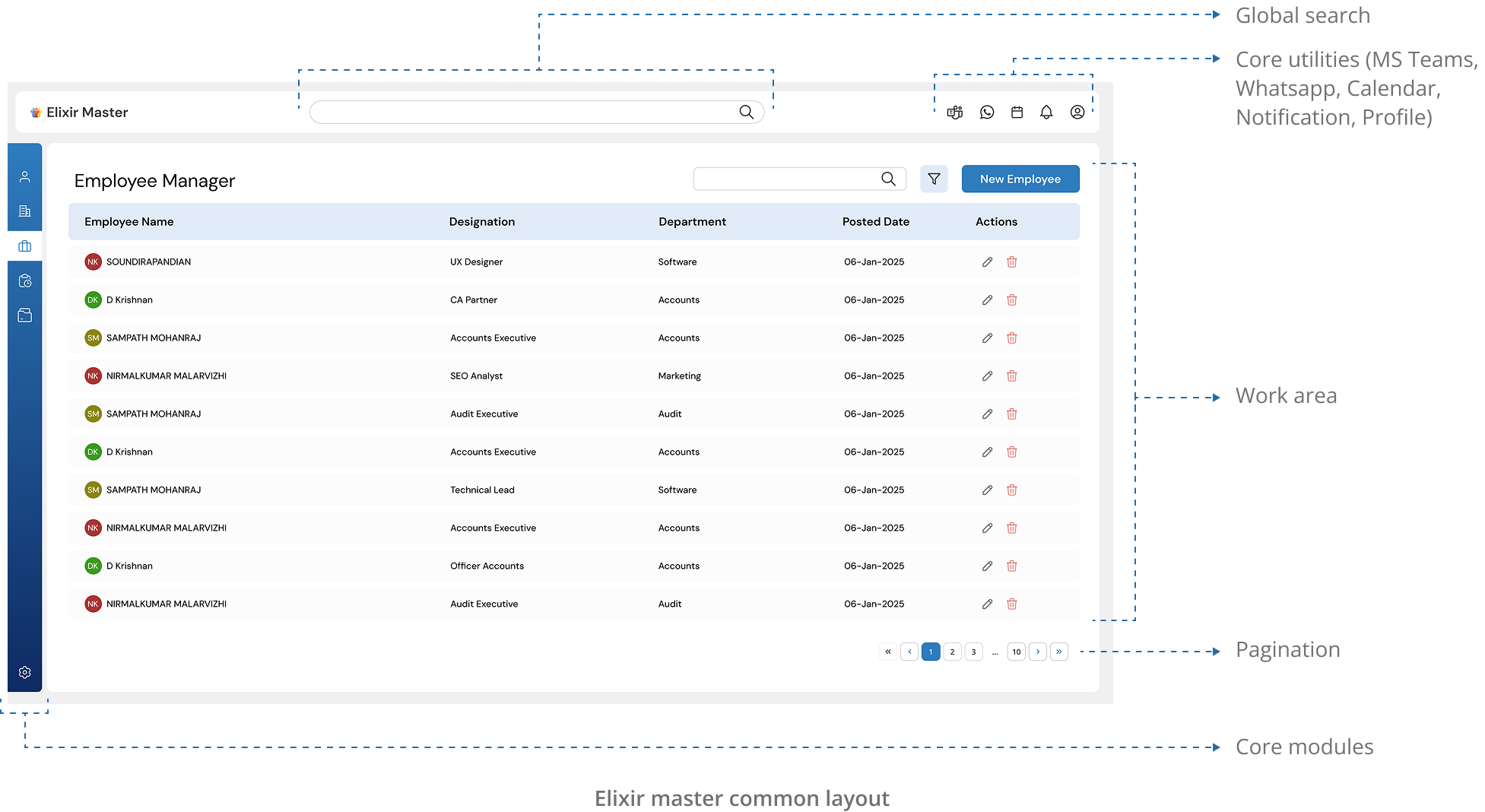
A shared structure connects every part of the product.
Consistent navigation, layout patterns and interaction models meant users could move across modules , clients, employees, tasks and files , without re-learning a new interface each time.
The system needed to feel familiar for different operational roles while staying flexible enough to support each module's specific needs.
02 Connecting Management Workflows
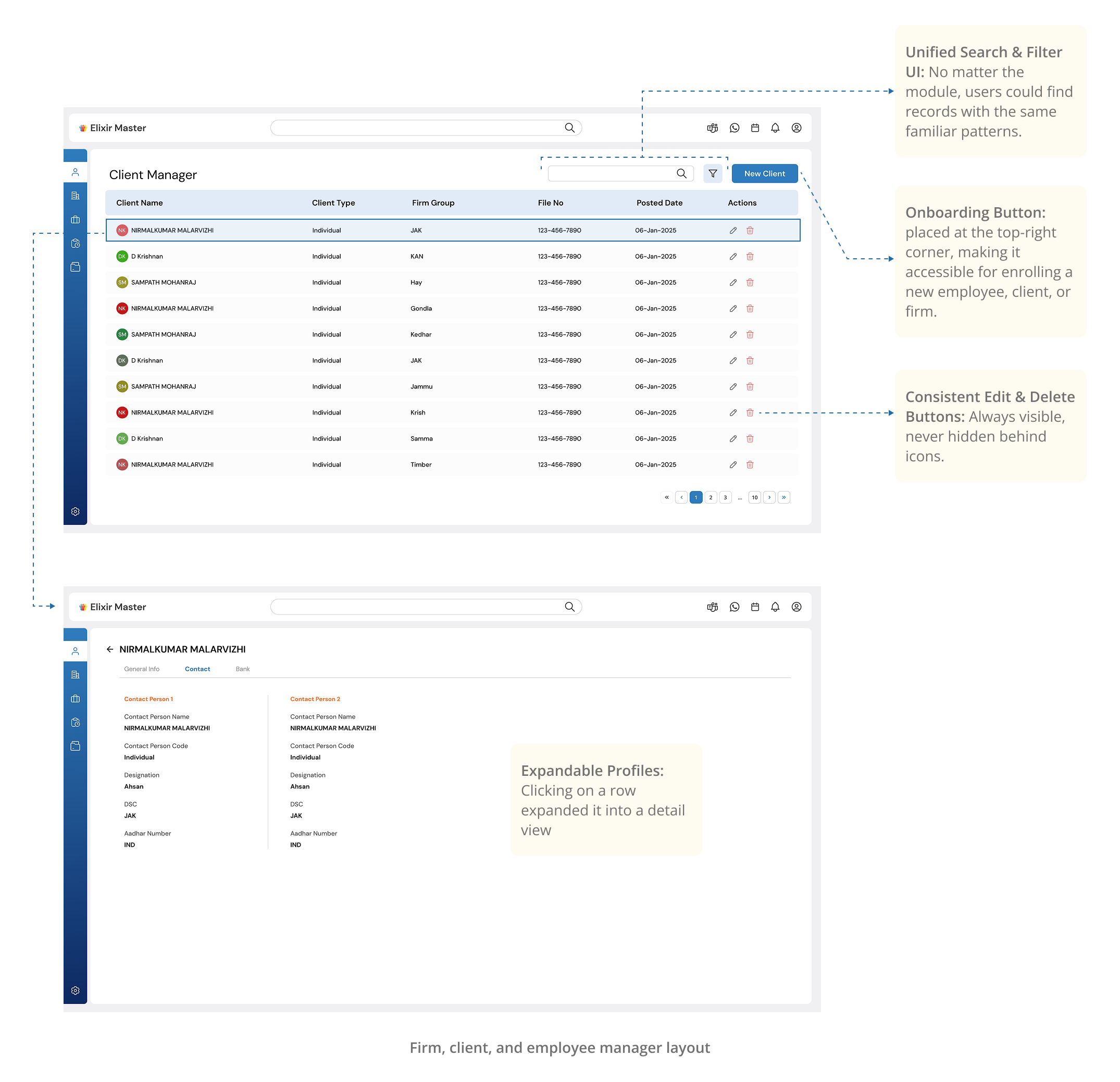
Employees, clients and firms follow one consistent interaction model.
Each management area , clients, employees, firms , used to be handled separately with no shared patterns or connected data.
I designed a unified interaction model so that creating, viewing and updating records followed the same structure across every module, reducing training time and making the platform predictable to use.
03 Structuring Complex Task Management
Turn multiple task dependencies into clear, manageable workflows.
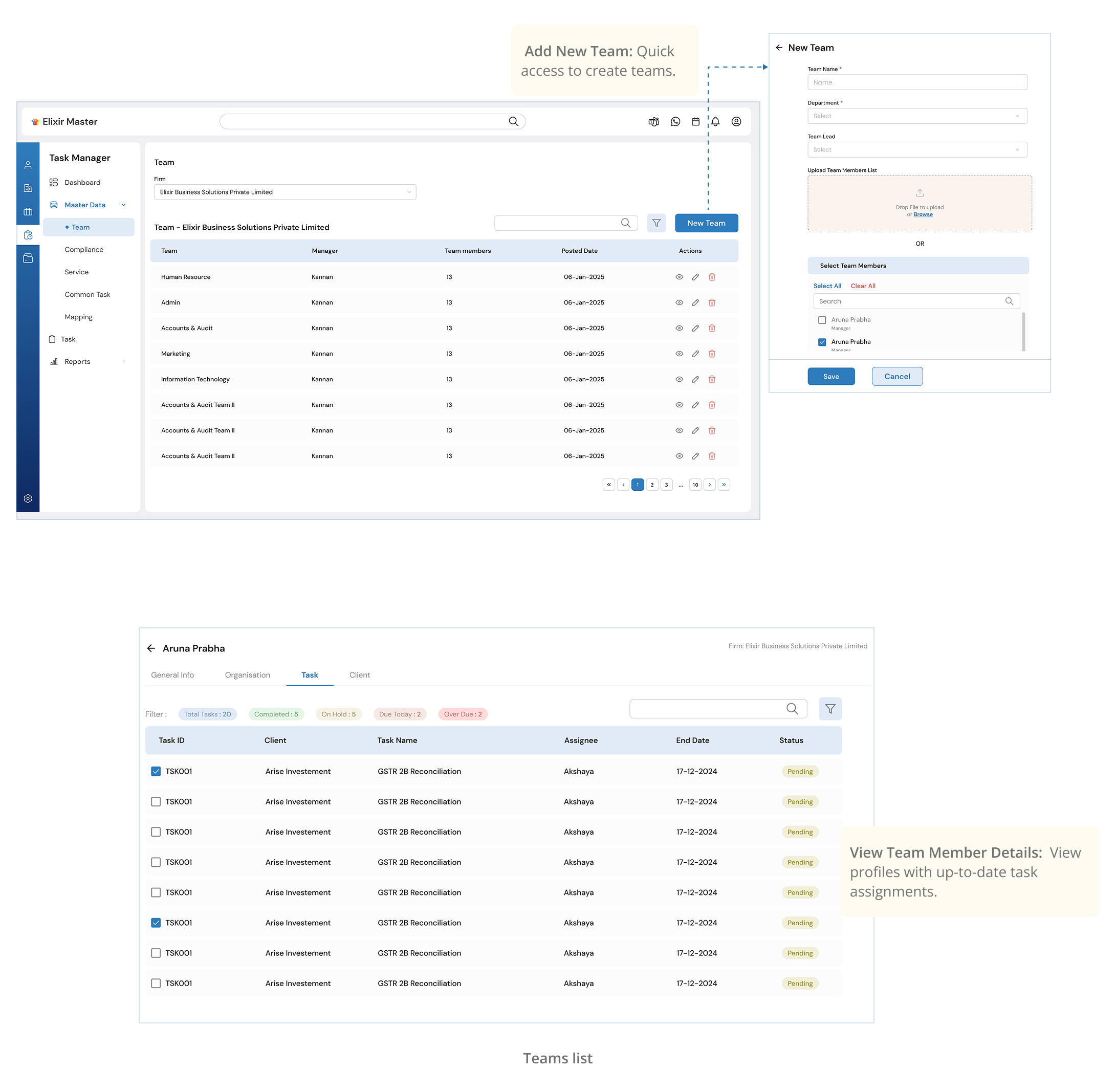
Tasks, employee reviews, task templates and approval chains created significant complexity for both employees and managers.
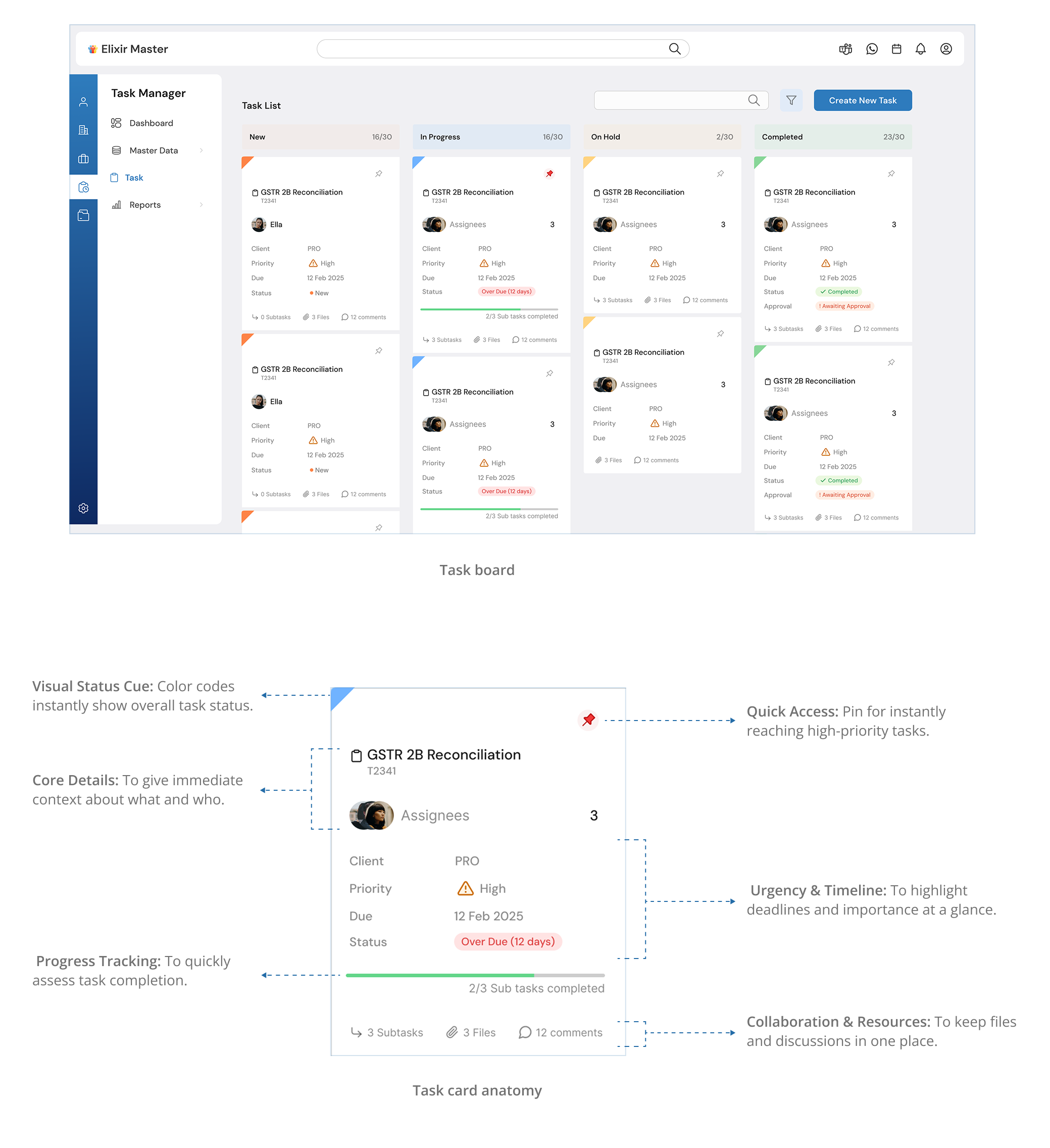
I structured these workflows using clear list views, step-based task creation and shared status patterns so teams could manage work without navigating between separate tools or losing track of what needed to happen next.
04 Simplifying File Management
Make documents organisationally part of the workflow.
Files and documents were spread across emails, shared drives and standalone portals , disconnected from the tasks and clients they belonged to.
I integrated file management directly into the relevant modules so documents were always found in the right context, with clear actions for uploading, viewing and sharing without leaving the workflow.